

AI Search Engines: What They Mean for Your Business
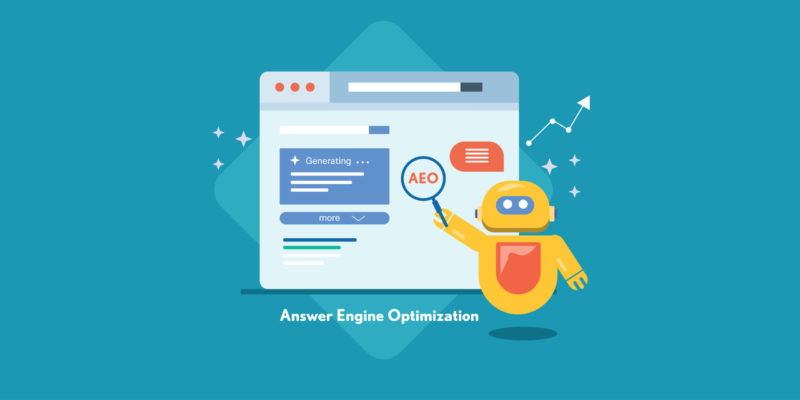
AI-powered search engines are changing how customers find answers online. It’s changing how businesses are chosen: instead of showing a list of links, modern search platforms increasingly deliver direct answers, summaries, and recommendations within the search experience itself.
Tools like Google AI Mode and AI Overviews, along with ChatGPT, Perplexity, Gemini, and Microsoft Copilot, analyze intent, evaluate credibility, and surface information they trust—often before a user ever clicks a website.
For service-based and local businesses, this means visibility is no longer just about rankings. It’s about whether AI systems understand your expertise well enough to recommend you as an answer.
Why Traditional SEO Alone Isn’t Enough Anymore
In the past, SEO success focused heavily on keywords and page-level optimization. While those fundamentals still matter, AI-driven search introduces a new layer: answer selection.
Google and other AI platforms now evaluate:
- Whether your content demonstrates real-world experience
- How clearly your services, locations, and expertise are defined
- Whether your site supports its claims with structure, consistency, and depth
This aligns closely with Google’s E-E-A-T framework (Experience, Expertise, Authoritativeness, Trustworthiness), but AI systems apply these signals across your entire site rather than just individual pages.
Just as businesses once adapted to mobile-first indexing and voice search, today’s shift requires optimizing for how AI systems interpret meaning, credibility, and user intent together.
AI agent uses generative artificial intelligence for robotic automation, business analysis, marketing application, network system search engine investment.
How Google AI Mode & AI Overviews Choose Sources
Google AI Mode and AI Overviews rely on Gemini-powered models to generate summaries directly in search results. These summaries are built from sources Google considers accurate, transparent, and genuinely helpful.
From an agency standpoint, improving your chances of inclusion means:
- Using structured data (FAQ, HowTo, LocalBusiness schema) so AI can clearly parse your content
- Writing in a natural, conversational way that mirrors how customers actually ask questions
- Demonstrating firsthand experience through original insights, examples, and visuals
- Clearly defining local relevance with consistent city references, service areas, and verified business information
- Supporting key pages with internal resources, such as our cornerstone guides on how local SEO drives leads for service businesses in Colorado & Nebraska, and Google Map Pack SEO Guide 2025.
These elements help Google’s AI confidently pull information from your site when generating AI Overviews.
How AI Assistants Like ChatGPT, Perplexity, Gemini & Copilot Use Content
AI assistants such as ChatGPT, Perplexity, Gemini, and Microsoft Copilot operate differently from traditional search engines. They prioritize clear answers, strong context, and signals of authority over promotional language.
For businesses, this means content performs better when it:
- Answers questions directly and early, then expands with helpful detail
- Uses clear headings, logical structure, and supporting explanations
- Reinforces topical depth through internal linking, including pages like Local SEO Case Study: Colorado Family Business Success and Landing Page Best Practices for Local Service Businesses reinforce thematic authority.
- Includes long-form FAQs and schema to improve extractability
- Maintains consistent business details, as outlined in the importance of your NAP (Name, Address, and Phone) and how to use local SEO citations to benefit your business.
AI systems favor connected content ecosystems, where multiple pages support the same expertise rather than isolated blog posts.
What This Means for SEO, CRO, and Lead Generation
AI-driven search doesn’t eliminate traffic, but it does filter out lower-intent visitors. When users click through, they tend to be higher-intent because the AI has already pre-qualified the answer.
That’s why SEO and CRO now work hand-in-hand:
- Clear expertise builds trust before the click (see our Local SEO Case Study).
- Simple, scannable layouts improve usability for both humans and AI (from Landing Page Best Practices for Local Service Businesses)
- Strong conversion paths ensure AI-delivered visitors turn into leads, using insights from What is CRO? Conversion Rate Optimization for Small Business and avoiding issues highlighted in Top 10 CRO Mistakes Local Businesses Make.
The goal isn’t just being visible, it’s being chosen and converted.
How Our Agency Helps Clients Adapt to AI Search
At Acquire, we view AI search as an evolution of SEO, not a replacement for it. Our role is to help clients stay visible across both traditional search results and AI-generated answers by aligning technical SEO, structured data, content clarity, and conversion strategy.
We actively monitor changes across Google AI Mode, AI Overviews, Gemini, ChatGPT, Perplexity, and Microsoft Copilot to ensure the sites we manage are eligible, understandable, and trustworthy in AI-driven environments.
For our clients, that means fewer reactive changes and more long-term visibility as search continues to evolve.
