


What INP Measures
Interaction to Next Paint (INP) is Google’s newest Core Web Vital and by 2026, it will be one of the clearest performance-based differentiators in local SEO.
INP measures how quickly your site responds to real user interactions, such as:
- Clicking a button
- Tapping a navigation item
- Submitting a form
Unlike older metrics that focused on page load alone, INP evaluates responsiveness throughout the entire visit. For service businesses, this matters because most conversions happen after the page loads, when users interact with CTAs, forms, and booking tools.
Benchmarks That Impact SEO
Google’s current guidance for INP scoring is:
- Good: ≤ 200 ms
- Needs Improvement: 200–500 ms
- Poor: > 500 ms
Sites with poor INP scores often experience:
- Lower Map Pack engagement
- Reduced mobile conversions
- Suppressed rankings despite strong content
This is especially critical for local visibility, where performance compounds trust signals. As explained in
EEAT & Local SEO: Building Trust and Authority for Better Rankings, user experience and technical stability directly influence how trustworthy Google perceives a business.
Fixes That Move the Needle (JS, Fonts, Images, 3rd-Party)
JavaScript (The #1 INP Killer)
Heavy JavaScript blocks the main thread and delays interaction responses. Common culprits include:
- Page builders with excessive scripts
- Tag managers firing too early
- Chat widgets and call-tracking tools
Reducing JS execution time improves both INP and overall page speed for local SEO, reinforcing the same performance signals Google uses when ranking service businesses.
Fonts & Layout Stability
Large web fonts delay rendering and interaction readiness. Best practices include:
- Limiting font families and weights
- Using
font-display: swap - Preloading critical fonts only
Images & Media
Unoptimized images increase interaction delay, especially on mobile. Ensure:
- Proper sizing (no oversized hero images)
- Lazy loading below-the-fold content
- Modern formats like WebP
These fixes pair directly with conversion improvements discussed in What is CRO? Conversion Rate Optimization for Small Business.
Third-Party Scripts
Analytics, booking software, and call tracking tools are necessary, but dangerous if unmanaged. Many of the most damaging performance issues we see come from uncontrolled third-party scripts, a common oversight highlighted in Top 10 CRO Mistakes Local Businesses Make.
Measuring INP with GSC & Lighthouse
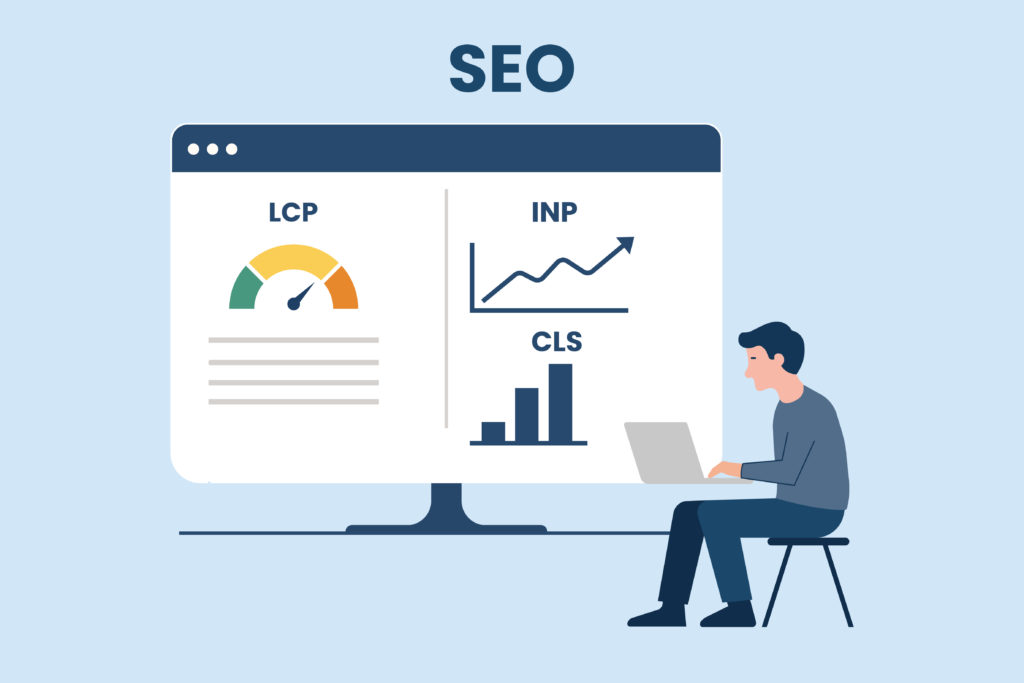
To prepare for 2026, performance must be measured continuously, not guessed.
Google Search Console (GSC):
- Reports INP under “Core Web Vitals”
- Uses real user (field) data
- Groups issues by URL type
Lighthouse / PageSpeed Insights:
- Provides lab diagnostics
- Highlights blocking scripts and render delays
- Helps dev teams isolate root causes
These tools should be reviewed alongside local visibility metrics, as explained in Google Map Pack SEO Guide 2025.
Performance Is a Local Ranking Multiplier
Performance doesn’t exist in isolation. Faster, more responsive sites:
- Convert more traffic
- Increase trust signals
- Support Map Pack rankings
- Improve seasonal and time-sensitive searches
This is why technical performance underpins broader strategies like How Local SEO Drives Leads for Service Businesses in Colorado & Nebraska and seasonal execution covered in Holiday Hours & Seasonal SEO: How to Optimize Your Google Business Profile.
Dev Checklist for 2026 (Local Sites)
Before INP becomes non-negotiable, local service sites should ensure:
- ✅ INP consistently under 200 ms
- ✅ JavaScript deferred or delayed where possible
- ✅ Fonts optimized and limited
- ✅ Images compressed and properly sized
- ✅ Third-party scripts audited quarterly
- ✅ Conversion paths tested on mobile
Landing pages supporting ads and GBP traffic should also follow Landing Page Best Practices for Local Service Businesses to avoid performance bottlenecks that kill leads.
Performance, AI Search & the Future
AI-powered search engines increasingly factor site usability and responsiveness into what content they summarize or recommend. A slow, unresponsive site is less likely to be surfaced, no matter how good the content is.
This makes performance optimization foundational to How to Optimize for AI Search Engines, where structured data, trust, and speed converge.
Proof That Performance Pays Off
In our Local SEO Case Study: Colorado Family Business Success, performance improvements directly contributed to better engagement, higher-quality leads, and sustained rankings, demonstrating that Core Web Vitals are not theoretical metrics, but revenue drivers.
